Some stories begin with imagination. Others begin with inheritance.
For Marilee Diamanti, writing Second Chance: A True Story meant returning to a history that had lived quietly within her family for generations. At the center of the book is her father, Pavlos, a young man whose life was forever altered during World War II. After joining the Resistance alongside his siblings, Pavlos faced a firing squad, survived the unimaginable, and spent the rest of his life carrying both the miracle of survival and the grief of those who did not return.
In this deeply personal conversation with WritersNAuthor, Diamanti reflects on preserving family history, writing through emotional pain, understanding her father beyond the role of parent, and discovering why survival is only the beginning of a second chance.

WritersNAuthor
You have described writing as a safe and honest way to express yourself. How did that private relationship with writing eventually lead you to tell such a significant family story?
Marilee Diamanti
Writing has always been a private refuge for me. It was the place where I could express things more truthfully and clearly than I could aloud. It gave my thoughts room to exist without interruption and allowed emotions to take shape without needing to be justified or explained.
But certain memories carry weight. They return to us. They ask more of us.
My family history was like that. It lived in our silences, our losses, and the invisible threads that shaped who we became. Writing Second Chance was not about inventing a story. It was about uncovering one that had always been there, waiting beneath the surface.
My father’s story and the story of his family carried the weight of World War II, a chapter of history that exists not only in books, but in the lives it forever changed. I felt a deep responsibility to preserve it because some stories are not meant to fade. They are meant to be carried forward.
In the end, I did not choose this story simply because it was significant. I told it because it would not let me go.
WritersNAuthor
Was there a defining moment when you realized Pavlos’s story had to be written before it was lost to time?
Marilee Diamanti
The moment came when my children were old enough to understand.
Until then, the story had lived quietly within me, almost protected by time. But as they grew, I began to feel a responsibility not only to remember it, but to pass it on.
At the same time, I became aware that the people who truly knew the story—the people who had lived through it and carried its details—were gradually passing away. With every loss, another piece of the story risked disappearing.
That was when the project became urgent. It was no longer only about family memory. It was about preservation.
I knew that if I did not write Pavlos’s story, it might become fragmented, incomplete, or forgotten. That was something I could not allow.
WritersNAuthor
How did being a wife and mother shape the way you approached this memoir?
Marilee Diamanti
Those roles influenced the book more deeply than I expected.
As a mother, I became very aware of the invisible connections between generations. We do not pass down only names, dates, and stories. We also pass down resilience, identity, values, and ways of understanding the world.
Writing the book became an act of stewardship. I often wondered how my children would one day sit with these pages, what they might recognize, what might surprise them, and what parts of themselves they might discover in the lives that came before them.
That thought carried both tenderness and responsibility. I wanted to be honest, careful, and respectful of memory.
As a wife, I came to understand the quiet strength found in partnership. It is not always expressed through dramatic gestures. It can be found in patience, endurance, and the ability to remain beside someone through uncertainty and change.
That understanding helped me recognize the sacrifices within my family that were never named, the emotions that were carried rather than spoken, and the silences that often communicated more than words.
WritersNAuthor
You uncovered painful new details during your research. Was there one discovery that changed you most profoundly?
Marilee Diamanti
The moment that changed me most was learning, step by step, exactly what happened to my father—the sequence of events, the moment he realized he was still alive, and the agony he endured while being rescued.
Until then, it had been a story I had known all my life. But once I understood those details, it became painfully immediate.
What made it even more overwhelming was that my own son was approximately the same age my father had been at that time.
Suddenly, I could no longer see my father only as the man who raised me. I saw him as a boy—as young and vulnerable as my son.
That changed everything. It brought the past directly into the present. I felt the fear, fragility, and courage of his experience in a way I had never felt before.
WritersNAuthor
The book combines family memory with the wider history of World War II. How did you balance emotional truth with historical accuracy?
Marilee Diamanti
That balance was one of the most difficult parts of the writing process.
Memory carries emotion, but history requires precision. I felt responsible for honoring both.
I allowed myself to write from the heart and follow the emotional truth of the story as it had been remembered and lived within my family. Those emotions are essential because they allow readers to connect with the human experience behind historical events.
At the same time, I approached the historical background carefully. I researched, verified information, and cross-checked facts wherever possible.
I also wanted the book to remain accessible to younger readers. I did not want the historical information to feel overwhelming or distant. I wanted readers to understand the world Pavlos lived in while remaining connected to the people within it.
History gave the story structure. Emotion gave it a voice.
The book found its truth somewhere between the two.
WritersNAuthor
What was most challenging about gathering testimonies and piecing together fragmented memories?
Marilee Diamanti
Everyone remembers events in a different way.
Memory is shaped by perspective, emotion, and time. I did not necessarily encounter contradictions so much as variations. It felt like assembling a puzzle in which every piece contained truth, but no single piece was complete.
My responsibility was to gather those pieces carefully and place them into a coherent whole.
The emotional weight was another challenge. These were not distant historical events for the people recounting them. They were painful, deeply personal memories.
Sometimes emotion blurred a detail. Sometimes a silence communicated more than a sentence.
I had to learn to listen not only to what people said, but also to what they could not say.
WritersNAuthor
How did you make sure the people who lived through these events were represented authentically?
Marilee Diamanti
I approached each testimony with humility.
I never wanted anyone to feel as though I was simply collecting material. I felt that I was being invited into someone’s private emotional landscape.
Authenticity began with listening without interruption or expectation. People remember through hesitation, emotion, contradiction, and silence. Those elements are part of memory, so I did not try to erase them.
At the same time, I understood that personal recollection and historical fact do not always align perfectly. I cross-checked details whenever possible and grounded the narrative in verifiable events.
My goal was to honor both what happened and how it was experienced.
WritersNAuthor
Why is preserving lesser-known personal history from World War II still important?
Marilee Diamanti
Large historical narratives often flatten individual experience.
Official history tends to focus on battles, treaties, military movements, and political decisions. But people lived through those events in deeply personal ways—in kitchens, around family tables, in whispered conversations, and in decisions made under tremendous pressure.
Personal history restores the human cost of war.
It also protects against oversimplification. As time passes, memory can become selective, and history can be reduced to familiar summaries. Lesser-known testimonies challenge that. They add nuance, resist forgetting, and keep the past morally and emotionally understandable.
A younger reader may not immediately connect with geopolitical language, but they can understand hunger, fear, displacement, love, courage, and loss.
That is how history remains alive.
WritersNAuthor
Your father’s survival after facing a firing squad is extraordinary. What was it like to write that scene?
Marilee Diamanti
The first time I tried to write it, I had to stop almost immediately because I began crying.
It was not simply the fact of what happened. It was the experience of imagining myself inside that moment—my father facing something so final, and yet surviving it.
I needed time before I could return to the page. I had to create enough emotional distance to shape the experience into words without becoming overwhelmed again.
That distance was not meant to remove emotion. It allowed me to write with clarity and honesty.
I was deeply aware that I was writing not only about survival, but also about fear, chance, and the fragile boundary between life and death.
That responsibility made the writing slower and more careful.
WritersNAuthor
What do you believe gave Pavlos the strength to survive physically, emotionally, and spiritually?
Marilee Diamanti
It is impossible to reduce survival under those circumstances to one explanation.
I believe there was an instinctive will to live—not something dramatic or heroic, but something quiet and stubborn. In extreme moments, survival may depend upon an inner refusal to disappear, a small voice saying, “Not yet.”
But beyond physical survival, I believe meaning sustained him.
He carried memory, family, responsibility, and a connection to those who had been lost. He was not only surviving for himself. He was carrying something that belonged to others.
There was also a quiet resilience in him that became more visible in the way he lived afterward. He rebuilt. He loved. He remained human after experiencing something that could easily have taken his humanity away.
His strength came from instinct, meaning, memory, and endurance working together.
WritersNAuthor
How did writing the book change your understanding of him?
Marilee Diamanti
The change was gradual.
As a child, I knew him in the present tense—as my father, with his habits, tenderness, authority, and silences.
Writing the book forced me to move backward and reconstruct the life he had before I knew him. I began to understand how much of that earlier life continued to exist within him, even when it was never spoken about.
The greatest change was in how I understood his silence.
What I may once have interpreted as distance or restraint became something far more complex. It was a way of carrying experiences that could not easily be translated into everyday language.
I stopped seeing silence as an absence. I began to recognize it as a form of expression.
The writing did not simplify him. It made him more layered and more human.
WritersNAuthor
What do you hope readers feel when they first encounter Pavlos’s story?
Marilee Diamanti
I hope they pause.
I want them to understand that they are not simply entering a historical account. They are encountering something real, fragile, and deeply human.
I hope they experience recognition—not because they have lived through the same events, but because they recognize the shared humanity within them.
Behind every historical event were individuals with fear, love, hopes, and impossible choices. I want Pavlos’s story to move history from something distant into something intimately lived.
I also hope readers think about what comes after survival.
Survival is not only an extraordinary moment. It is the life that must somehow continue afterward and find a new shape.
WritersNAuthor
How do you personally define a second chance?
Marilee Diamanti
A second chance is not simply an opportunity to begin again. It is a moment of awareness.
It is the realization that life could have taken a different path, that something could have ended, been lost, or failed to continue—and yet it did not.
In the book, that second chance is literal. Pavlos survived when, by every expectation, his life should have ended.
But the deeper meaning lies in what he did with that continuation.
A second chance does not erase what came before. It asks us to carry the past with greater awareness, gratitude, and humility.
It is the opportunity to write the next chapter with a deeper understanding of the story.
WritersNAuthor
Do people recognize their second chances as they happen?
Marilee Diamanti
Usually not.
A second chance rarely announces itself as something extraordinary. In the moment, it can feel confusing, fragile, or even ordinary.
People may still be living inside shock, fear, or uncertainty. They are often focused simply on continuing.
The meaning becomes clearer in hindsight. Looking back, we recognize the threshold—the point at which life could have gone another way.
We often live our second chances before we understand them.
WritersNAuthor
Your book speaks strongly about resilience. What does resilience look like today compared with resilience during wartime?
Marilee Diamanti
The inner core is the same, but the pressures are different.
During World War II, resilience often meant physical survival in the presence of hunger, danger, displacement, fear, and death. It became something elemental—the ability to continue when everything around you was collapsing.
Today, resilience can be quieter. It may appear through emotional recovery, rebuilding after personal loss, navigating uncertainty, or preserving one’s identity in a rapidly changing world.
Modern struggles may be less visible, but they are not necessarily less demanding.
Resilience is still the repeated decision to continue rather than withdraw.
Wartime resilience is immediately recognized as survival. Today’s resilience can easily go unnoticed because it happens within ordinary life.
WritersNAuthor
The Greek concept of philotimo is central to the book. How would you describe it?
Marilee Diamanti
Philotimo is difficult to translate into a single word.
It includes honor, dignity, compassion, responsibility, generosity, and moral presence toward others. It is an internal commitment to act not only for yourself, but in a way that respects your family, your community, and what you have inherited.
In Pavlos’s story, philotimo appears in the way he chose to live after the war.
Survival alone was not enough. What mattered was continuing with dignity, refusing to be diminished by what had happened, and remaining compassionate toward others.
It also shaped the way I wrote the book. To write with philotimo meant treating memory responsibly—not exploiting it, simplifying it, or separating it from the people who lived it.
WritersNAuthor
Your writing often focuses on quiet, unspoken moments. How do you write deep emotion without overstating it?
Marilee Diamanti
I try to resist explaining too much.
Deeply emotional moments rarely arrive in life with dramatic language. They appear through a pause, a gesture, a change in someone’s voice, or a silence that carries more meaning than words.
I try to remain faithful to that natural form.
Understated writing also requires trusting the reader. Emotion does not always need to be named in order to be felt.
Rather than saying exactly what a person feels, I focus on what can be observed—what was said, what was avoided, and what changed in the atmosphere.
When the detail is honest and precise, the emotion can speak for itself.
WritersNAuthor
Was there a passage that was especially difficult or meaningful for you to write?
Marilee Diamanti
The passage describing a dream about my father near the time of his passing was both the most difficult and one of the most meaningful.
It was not imagined. It came from something deeply personal that I had experienced.
On the surface, it may appear to be a simple and intimate dream, but it carried an emotional meaning that I only fully understood later.
Writing it required a delicate balance. I needed to be honest without exposing something that still felt sacred and private.
That passage became a quiet bridge between presence and absence, between connection and loss.
WritersNAuthor
How did you write honestly about trauma while still allowing hope to remain in the story?
Marilee Diamanti
I did not want to soften the reality of what happened. To do so would have been a disservice to the people who lived through it.
But I was also aware that trauma, when presented without any breathing room, can overwhelm a reader rather than deepen understanding.
Hope was not used as an escape or as a contrast to suffering. It appears as continuity.
It can be found in survival, remembrance, relationships, ordinary life, and the decision to rebuild.
Trauma and hope are not opposites. They often exist at the same time.
That coexistence reflects the way life actually behaves.
WritersNAuthor
You began this book partly for your children. What do you hope they carry forward from it?
Marilee Diamanti
I hope they carry a sense of continuity.
I want them to understand that their roots are not made only of names and facts, but of lived experiences, sacrifices, endurance, and choices.
I hope they recognize that family history is not distant. It lives within us.
Beyond history, I want them to carry a quiet understanding of resilience—that life can break and still continue, that love and loss can exist together, and that meaning can be built even from difficult beginnings.
I also hope they carry gratitude, not as an obligation, but as awareness.
Life can be fragile, but it continues to offer connection, grace, and possibility.
WritersNAuthor
How has sharing the story affected your family?
Marilee Diamanti
It created space for memory to become shared rather than private.
Things that had always been present but rarely spoken about could finally be acknowledged collectively.
For some family members, the book brought reflection. For others, it released emotions that had been held inward for years.
The history was no longer a collection of inherited fragments. It became a visible narrative that could be discussed and understood in new ways.
Most importantly, it brought generations into conversation.
What had once been silent became part of a living family dialogue.
WritersNAuthor
In what ways does Pavlos still live on?
Marilee Diamanti
He lives on through memory, values, influence, and story.
He remains present not only in what we remember about him, but in how our family responds to hardship, values dignity, and understands perseverance.
These qualities are often passed down without being explicitly taught.
By writing his story, I preserved more than a sequence of events. I preserved a way of being.
He also lives on through the internal conversations that continue—the questions I still ask, the memories I revisit, and the effort to understand him more fully.
Love does not end simply because a physical presence is gone.
WritersNAuthor
What is the most important message you want readers to carry after finishing Second Chance?
Marilee Diamanti
I hope readers leave with a greater awareness of the fragility and value of one human life.
Behind every war, tragedy, and historical event is a person who still had to find a way to live afterward.
I also hope readers begin to look differently at silence and memory. What is unspoken is not necessarily absent. Many important stories live beneath the surface of what we can immediately see.
Most of all, I hope readers remember that life is fragile, but persistent.
Even after loss, it continues to create meaning through relationships, choices, love, and remembrance.
WritersNAuthor
What would you say to someone who has been given a second chance but feels afraid to take the next step?
Marilee Diamanti
Fear does not necessarily mean you are not ready. It may mean that the choice matters.
A second chance often arrives after trust has been shaken—trust in life, in other people, or in ourselves. Hesitation is understandable.
But a second chance does not require you to erase the past.
It invites you to continue with the past in a different way.
You do not step forward as someone untouched. You step forward as someone who has already lived, endured, and learned something about what life can take.
Do not wait for fear to disappear. Look for the smallest step that feels honest.
Fear and possibility can exist together.
You can be afraid and still begin again.
WritersNAuthor
If readers take only one lesson from Pavlos’s life, what do you hope it will be?
Marilee Diamanti
I hope they understand that a human life is more resilient and meaningful than the moments that threaten to end it.
Pavlos’s story is not only about surviving an extraordinary event. It is about the quiet rebuilding that followed.
Survival was not one moment. It became a decision repeated through ordinary days—to remain present, to love, to endure, and to continue with dignity.
Second chances are not always dramatic. Sometimes they arrive quietly, woven into everyday life.
A life is never defined only by what happens to it. It is also defined by what it continues to become afterward.
Pavlos’s story is ultimately a story of continuation—a life that refused to end where it could have and instead became something more.
About the Author
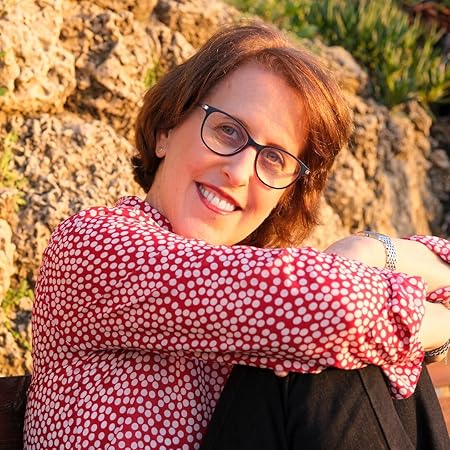
Marilee Diamanti is a writer whose work explores personal narrative, family history, memory, resilience, and the emotional layers of ordinary life. Her historical memoir, Second Chance: A True Story, preserves the extraordinary life of her father, Pavlos, and the experiences of a family shaped by resistance, sacrifice, grief, and survival during World War II.
Through careful research and deeply reflective storytelling, Diamanti transforms inherited memory into a lasting tribute to the resilience of the human spirit.
About the Book
Second Chance: A True Story recounts the life of Pavlos Diamantis, who joined the Resistance as a teenager alongside four of his siblings during World War II. After facing a firing squad with two of his brothers, Pavlos miraculously survived.

Told through the eyes of his daughter, the book explores not only the horror of war, but also survivor’s guilt, family legacy, philotimo, and the courage required to choose life after devastating loss.
At its heart, Second Chance is a testament to survival, remembrance, and the enduring belief that even after life’s darkest chapters, it is possible to begin again.
Learn More about the author: Website URL https://mdiamanti.gr