Our fractured nation and discordant culture need insightful, compassionate leaders more than ever. Now is the time for building bridges among seemingly distant entities, for forging community among seemingly distinct populations, and for finding solutions instead of exacerbating problems. And I can’t think of any group of people who are better at relationship-building, cooperative approaches, and conflict resolution than trained and experienced helping professionals.
Maybe I’m a little biased because I’m rooted in the social services myself, but I strongly believe that helping professionals make uncommonly gifted and effective leaders—and it’s because of their internal traits and natural instincts more than where they went to school and what degrees they have hanging on their wall. Chief among those inherent inclinations is the servant leader mindset that virtually all helpers possess.
The Servant Leader Mindset
Some people are just born servant leaders; and some people take to this way of being in the world early in their education or careers when they first encounter it because it just speaks to who they organically are. Part theoretical philosophy and part concrete skill set, the concept of “servant leadership,” coined in 1970 by Robert K. Greenleaf, is characterized by a collection of aptitudes that includes (but certainly isn’t limited to) active listening, empathy, awareness, foresight, conceptional thinking, relational healing, and self-regulation.
If you know a therapist, you know an active listener. If you know an elementary school teacher, I guarantee you they know how to self-regulate. And if you know any kind of rescue worker, you know someone who sees the bigger picture, who knows how to conceptualize all the short- and mid-term steps to attain the long-term goal.
At core, servant leadership is about putting others first—prioritizing the needs of those being served. So it’s no surprise that the “servant” part of the label comes easily to helping professionals of all types dedicated to the greater good—educators, counselors, social workers, healthcare workers, behavior technicians, rehab specialists, social service agency personnel, and so many more. It’s the “leadership” part they often doubt: their own potential in this area and if it even aligns with how they see themselves.
Ironically, the very deep “natural feeling” to want to serve that helpers possess in spades often precedes the aspiration to lead … and yet it’s the very thing that ultimately drives that aspiration.
Transitioning from Helper to Leader
Not all helping professionals want to leave the field to occupy a corner office. Some professors would much prefer to remain in the lecture hall than to pursue becoming dean. Some nurses want to stay on the ICU instead of campaigning to become a hospital administrator. And thank goodness for that—our society would be lost without all the people who remain committed to one-on-one, boots-on-the-ground community service.
But for those who do have the dream of advancing to the top tiers of organizational management—whether it’s just a kernel of an idea at this point or a full-blown vision—there are steps you can take to advocate for your own advancement as passionately as you advocate for the populations you serve.
- Believe in Yourself. I cannot overstress the importance of self-belief as the first and most critical step in enacting a plan to transition to leadership. I can’t tell you how many times I’ve heard colleagues say, “But I’m only a teacher,” “I’m only a food bank clerk—what do I know about leading teams or implementing policies?” Here’s what you know: You know how to power through resistance to learning, to relate to and connect with people from all walks of life, to figure out where there’s a lack and devise a way to fill it. And you know a lot more than that, actually. Every day, helping professionals fight for equality and fairness, they improve quality of life, and they make others feel seen, heard, and valued. All of these skills aren’t just related to inspired leadership; they define it.
Organizational leadership isn’t about power or status—it doesn’t make you selfish or any less devoted to your cause to want to achieve beyond your credentials and make a good living. On the contrary, it affords you a wider reach to populations in need and greater impact across the board from the supervisory level. Life might stop you from fulfilling your dreams—circumstances we can’t foresee, personal and family obligations that take precedence over our careers; but don’t stop yourself. Don’t let the self-imposed limitations in your mind block the application of your tremendous competencies and capabilities.
- Get Others on Board. There are two parts to this recommendation. First, voice your goals to your superiors, to those in your organization who make hiring and promotion decisions. They can’t know you want to advance until you tell them you want to. Show them your ambition, display your drive, ask to learn more about the company, and propose ways they can help you do so.
Second, get a mentor. Find someone you admire and want to emulate—either from within your organization or outside of it, like a community leader, college instructor, or subject-matter expert—and enlist their help in preparing you and grooming you for your dream position. It’s an honor to be looked up to, to be seen as a role model and an influential force in a particular field. Chances are your chosen mentor will accept your invitation and will be happy to share their knowledge and advice so that your joint field can progress.
- Lay Your Own Groundwork. Preparation is the key to all action. So before you’re ready to act, establish your own foundation for growth by getting ready to grow. How? By reading up on different leadership styles, approaches, and principles. By scouring the web for free content on developing leadership skills and the challenges leaders commonly face. By following leadership influencers on social media and learning what you can from their posts. By taking personality tests and job surveys that will help you identify your particular areas of strength and weakness.
Most people tend to want to capitalize on their strengths. I think it’s a better idea to attend to your deficits, to start working on fortifying them, to give you an advantage when a leadership opportunity arises. Like your own “Field of Dreams,” you’ve got to build your own stairway to where you want to go … then the destination might just appear!
- Extend Yourself. I know your job is hard. I know you work tirelessly every day for your students, patients, or clients. But if you want to lead, you’re going to have to work tirelessly for yourself as well. That means volunteering for extra duties at work so you continue to build your skills and master your craft. It means raising your hand to participate in internal committees and networking and support groups. It means taking it a step further and offering yourself up as the chair or facilitator of such initiatives.
You will increase your visibility; you will create platforms to practice your burgeoning leadership skills; and you will stand out among the crowd as someone willing to go above and beyond.
- Continue Your Education. Time and money are at a premium for most everyone, especially helping professionals who often don’t get paid a fraction of what they’re worth. But as Nelson Mandela espoused, “Education is the most powerful weapon which you can use to change the world.” You will never regret investing in your own ongoing learning, you just have to do so wisely and economically while you’re holding down a demanding full-time job.
You can audit evening courses at a nearby college, especially if you explain your goals to the instructor. You can take affordable online courses and enroll in webinars and workshop series that grant certificates of completion to add to your résumé. Most of all, take advantage of any professional development opportunities offered to you; service-based organizations don’t always have a lot of extra funding, but they often have continuing education programs for their employees that they’ll pay for to increase your value to them.
Closing Thoughts
Helping professionals not only have the makings of great leaders; they should be our society’s great leaders. If helpers were in charge of widespread crises, far-reaching legislation, and company missions, just imagine the transformations that could take place with their understanding of frontline challenges and their de-escalation and problem-solving acumen.
So if you want to step into leadership, it’s time to step up by mapping your way there today! And remember, service leadership doesn’t mean abandoning your mission to hold someone’s hand, to find a home for a displaced family, or to be by someone’s side at the end of life. Rather, it means having the capacity to touch an unlimited number of hands and to positively affect even more lives than you already do. A servant leader who is led by heart and by humanity is the best kind of leader there is. The world needs you. Heed the call.
**************************
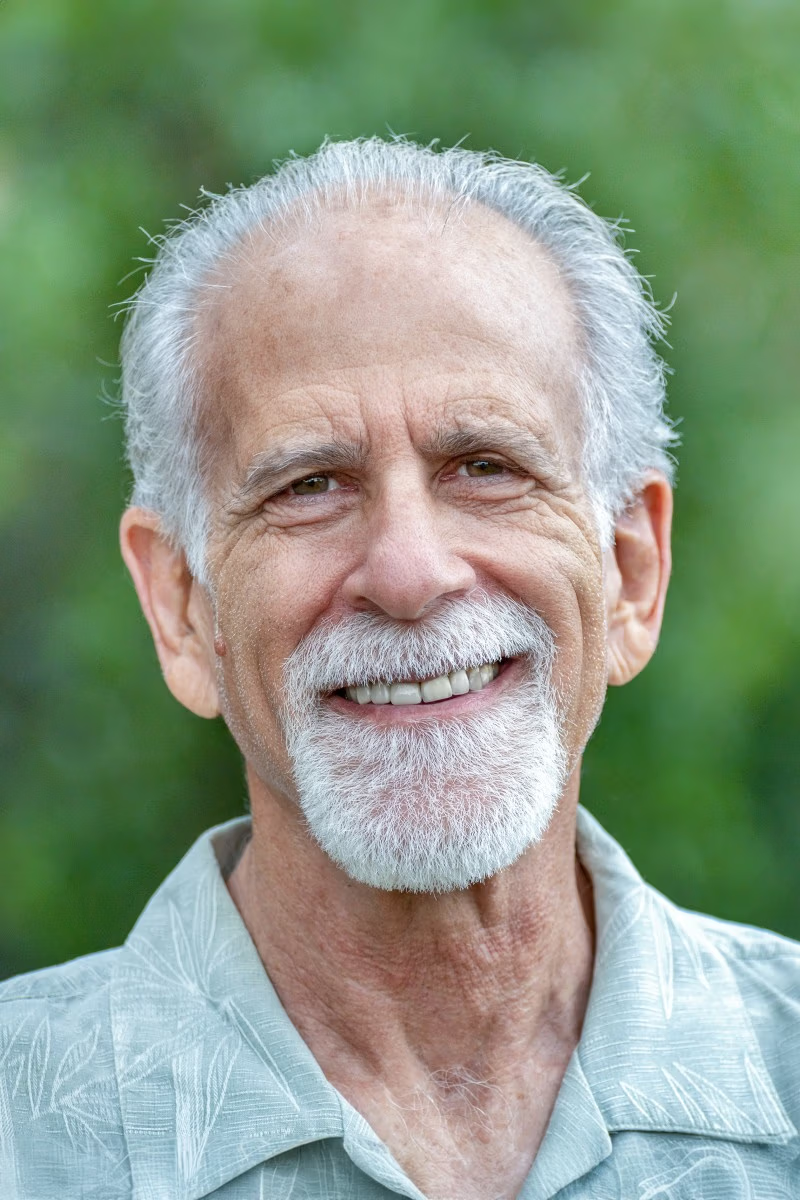
Michael L. Kaufman, MSW, PhD, is the author of Doing Good & Doing Well: Inspiring Helping
Professionals to Become Leaders in Their Organizations (Rowman & Littlefield, 2023). With the heart of a helping professional and the head of a business executive, he rose from being an in-the-field social worker to the CEO of one of the largest private education companies in the country. He currently runs the special education management and consulting company he founded, dedicated to effecting positive societal change and improving the future prospects of K–12+ students with exceptional needs. Learn more about him and his mission at michaellkaufman.com.

Doing Good and Doing Well: Inspiring Helping Professionals to Become Leaders in Their Organizations
Buy Now on Amazon https://amzn.to/4kOlH2q
Helping professionals of all types are everyday heroes who routinely and selflessly improve the lives of others. But they often don’t believe or realize that they also form a valuable pool of future leaders—that their specific characteristics, distinct aptitudes, and servant leader’s mindset not only prepare them, but already uncommonly equip them, to rise to the highest tiers of their organization’s leadership structure.
You don’t have to be either someone who does good in the world for others or someone who makes a good living running a company or managing others. You can be both—you can remain committed to the greater good of society and still lead a for-profit or nonprofit organization or become a successful entrepreneur. You can simultaneously activate your right-brain and left-brain faculties, apply your honed service-oriented side and your business-savvy side.
How does the author know this can be done? Because he did it himself! Sharing lessons learned over a 30-year career and featuring plentiful anecdotes to illustrate the pointed discussions and central themes, this book aims to inspire helpers to exercise the power they already possess and encourage them to travel a fruitful and fulfilling path to professional development and organizational leadership.