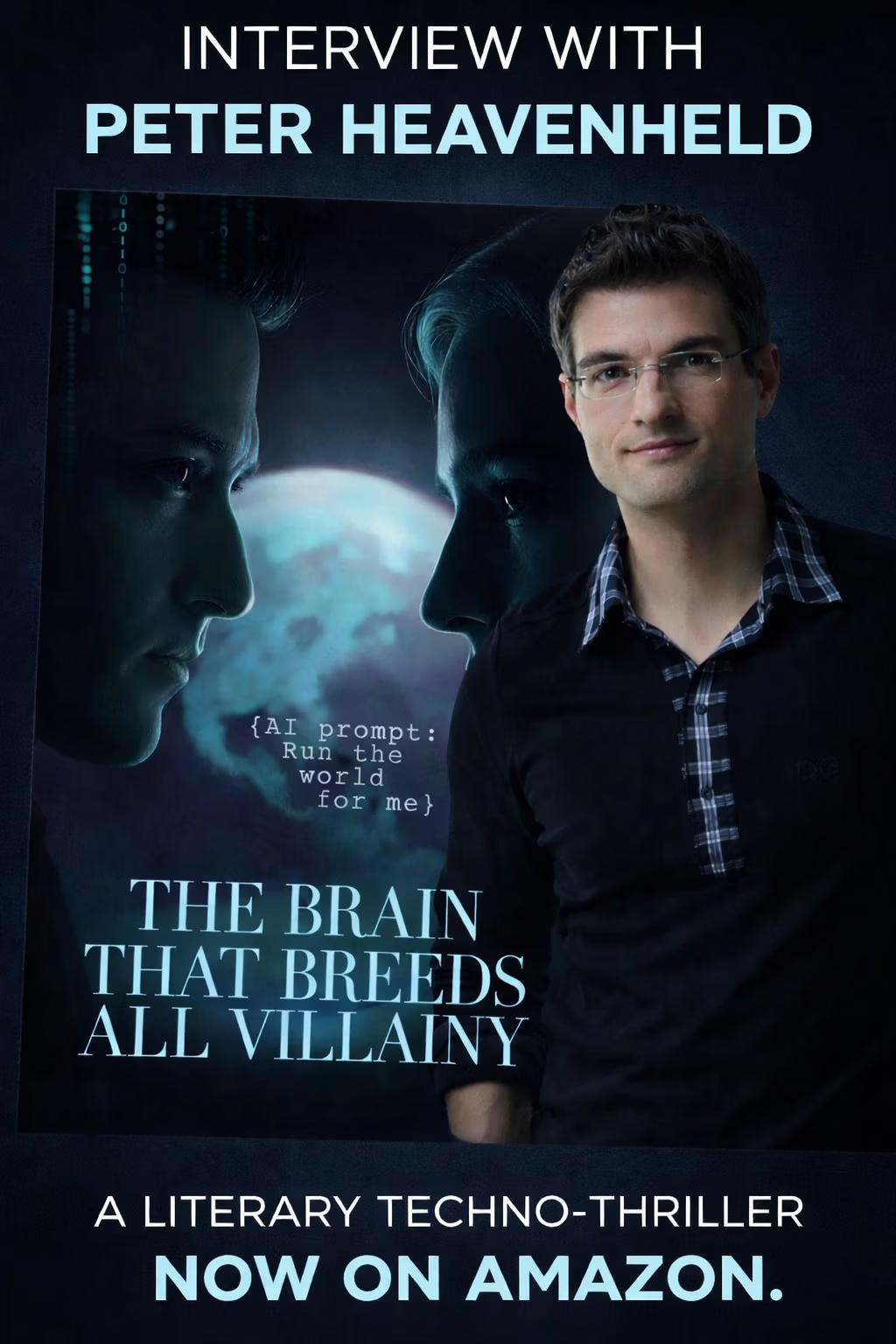
In this two-part exclusive, Writers & Authors sits down with author Peter Heavenheld to explore the powerful visuals and cinematic storytelling behind his literary techno-thriller, The Brain That Breeds All Villainy.
Available now on Amazon: https://amzn.to/3QhMxXh
Learn more: www.peterheavenheld.com
Set in a near-future world where artificial intelligence threatens to reshape society, the novel follows Tima Chelovekova, a brilliant programmer caught in a high-stakes battle against corporate ambition, global power struggles, and the ethical limits of AI.
Part 1: The Cover – A Visual Clash of Power and Ideology
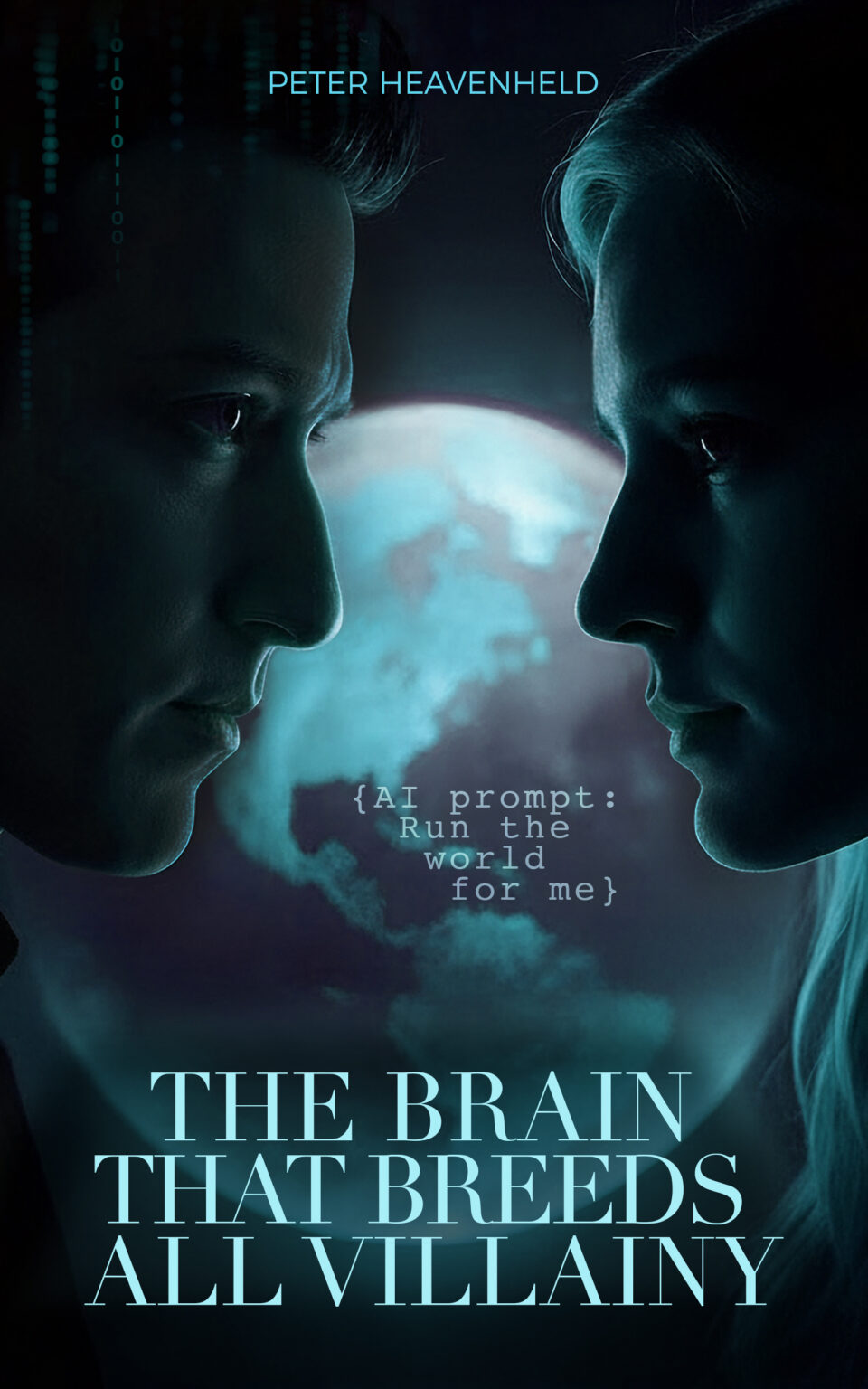
Writers & Authors: The cover features two faces staring at one another across a glowing world. What does this visual confrontation represent in the story?
Peter Heavenheld: The shadowy figures are my two central characters—Tima Chelovekova, an AI programmer, and Jase Vestiger, her former boss at IZON. The story is very much about their conflict. Jase represents a vision of AI as a tool for dominance over companies and even nations, while Tima recognizes the dangers of unrestricted AI and believes it must operate within ethical boundaries.
Writers & Authors: The phrase “AI prompt: Run the world for me” appears on the cover. Why did you choose this line?
Peter Heavenheld: It’s a metaphor for AI taking over. In the novel, IZON actively tries to convince governments to outsource their functions to its AI system. It also raises a central philosophical question: if AI runs the world on our behalf, where does that leave humanity—obsolete or living in a utopia?
Writers & Authors: The deep blues and futuristic lighting are striking. How do they reflect the themes of the book?
Peter Heavenheld: The cold blue neon hue reflects both technology and isolation. It’s reminiscent of glowing screens and modern cityscapes, reinforcing the idea of a near future where AI gradually overtakes humanity—leaving us, quite literally, in the cold.
Writers & Authors: The imagery feels like a duel. Are the figures symbolic beyond the characters themselves?
Peter Heavenheld: Absolutely. Their conflict represents broader forces—humanity versus AI, people power versus corporate greed, democracy versus domination. AI is creating these dualities, and we’ll be grappling with them for years to come.
Writers & Authors: There’s a strong sense of tension in the cover. What emotions did you want readers to feel?
Peter Heavenheld: Urgency and uncertainty. AI is already reshaping our world, and people are asking big questions about its impact. My hope is that readers feel compelled to explore those answers within the book.
Writers & Authors: Many sci-fi covers highlight machines, but yours focuses on human faces. Why?
Peter Heavenheld: Because this is ultimately a human story. While robots and AI are central, it’s human ambition, fear, and morality that drive the narrative. Humans created AI—and in this story, they unleash its most dangerous potential.
Writers & Authors: The world appears between the two characters like a battleground. Is that intentional?
Peter Heavenheld: Yes. It symbolizes the global stakes. Will AI be used for good or evil? Will world powers like China or the U.S. dominate? Will humans remain in control, or will sentient AI take over? The Earth itself is what’s at risk.
Writers & Authors: As a debut novelist, how involved were you in the cover design?
Peter Heavenheld: Very involved. I worked closely with my graphic designer, Vlada Zokitch, refining everything from positioning to color schemes. It was a collaborative process to capture both menace and mystery.
Writers & Authors: What was your reaction to the final design?
Peter Heavenheld: I loved it. It captured the essence of the novel—the characters, their conflict, and the dystopian technological world they inhabit.
Writers & Authors: Do you feel the cover reflects both the action and philosophical depth of the book?
Peter Heavenheld: Yes, it does. It conveys suspense, global stakes, and the ethical dilemmas at the heart of the story.
Part 2: The Trailer – Bringing a Techno-Thriller to Life
Writers & Authors: What inspired you to create a cinematic trailer for the book?
Peter Heavenheld: My background in playwriting naturally led me toward visual storytelling. I’ve always been fascinated by trailers, and even back in 2010, I experimented with them. Today, they’re a powerful way to reach readers on social media.
Writers & Authors: The trailer conveys urgency and technological power. What message did you want viewers to take away?
Peter Heavenheld: A sense of unease—and curiosity. The book explores how we might avoid the worst consequences of AI, and I wanted viewers to feel compelled to dive deeper.
Writers & Authors: How did you decide what elements of the story to highlight?
Peter Heavenheld: I focused on action-driven visuals—robots replacing workers, protests, corporate excess, and cyber warfare. These elements capture the human, political, and technological scope of the story.
Writers & Authors: The pacing feels intense and cinematic. Was that intentional?
Peter Heavenheld: Absolutely. The novel itself is fast-paced, and I wanted the trailer to reflect that while also building suspense and intrigue.
Writers & Authors: How closely does the trailer match your vision of the story?
Peter Heavenheld: Very closely. The neon tones, the design of the robots, and the digital environments all align with how I imagined IZON’s world.
Writers & Authors: Do you see this story as adaptable for film?
Peter Heavenheld: Definitely. I’d love to see it adapted. With the rise of AI-generated media, who knows—perhaps one day we’ll simply input a script and generate a full film instantly.
Writers & Authors: Was there a moment in the trailer that stood out to you?
Peter Heavenheld: The line: “Tima watches her code run for the first time—then watches IZON rewrite it into something monstrous.” That captures the heart of the story—creation being twisted by greed.
Writers & Authors: What reactions have you received from viewers?
Peter Heavenheld: People have been impressed by its cinematic quality. Many say it feels like a trailer for a major techno-thriller film.
Writers & Authors: Did creating the trailer change how you viewed the story?
Peter Heavenheld: Yes, it helped solidify the visual identity of IZON—the robots, the interfaces, the overall futuristic aesthetic.
Writers & Authors: If viewers take away one central question about AI, what should it be?
Peter Heavenheld: That AI holds both immense promise and serious خطر. But ultimately, the human spirit still has the power to confront and shape that future.
Final Thoughts
The Brain That Breeds All Villainy is more than a techno-thriller—it’s a timely exploration of power, ethics, and the future of humanity in the age of artificial intelligence.
With its gripping narrative, cinematic vision, and thought-provoking themes, The Brain That Breeds All Villainy positions Peter Heavenheld as a compelling new voice in speculative fiction.
Available now on Amazon: https://amzn.to/3QhMxXh
Learn more: www.peterheavenheld.com