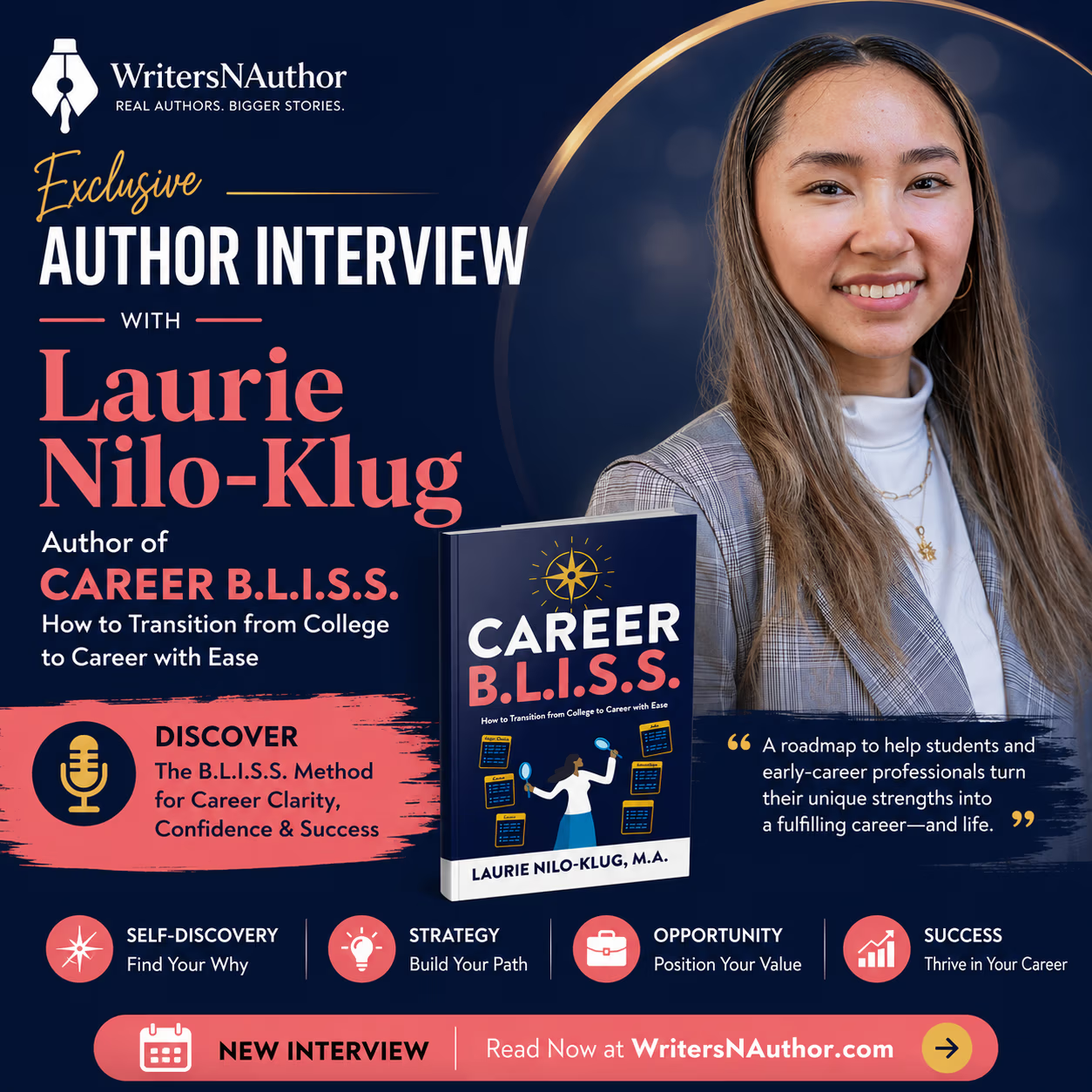
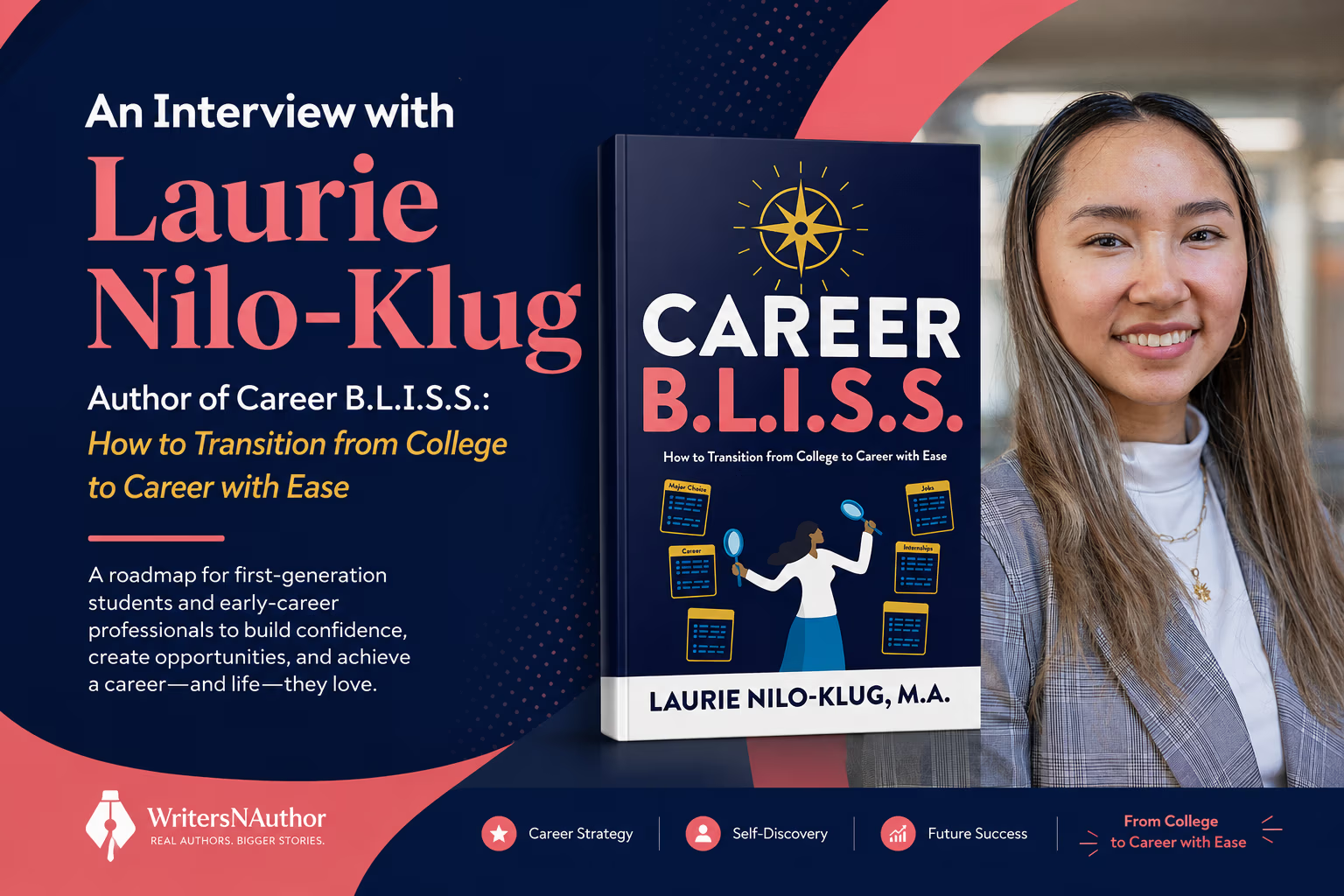
WritersNAuthor: Every year, millions of students graduate believing they’ve checked every box—earned good grades, completed internships, joined clubs, and networked—yet many still struggle to land meaningful careers. Today we’re joined by Laurie Nilo-Klug, author of Career B.L.I.S.S.: How to Transition from College to Career with Ease, a career development expert whose innovative B.L.I.S.S. framework is changing the way students approach life after graduation. Laurie, welcome! Your book has sparked conversations because it challenges so much of the traditional career advice we’ve all heard.
Laurie Nilo-Klug: Thank you so much for having me! I’m excited because this conversation is one I believe every student, recent graduate, educator, and employer needs to hear. Career B.L.I.S.S. isn’t just about getting a job—it’s about creating a career that celebrates who you are and supports the life you want to live.
Looking Beyond Traditional Career Advice
WritersNAuthor: Your book begins by questioning the very advice students have been hearing for years. What convinced you that young professionals didn’t simply need more career tips—they needed an entirely different approach?
Laurie Nilo-Klug: I kept meeting what I call “star students.” They earned impressive grades, joined organizations, completed internships, and did everything they were told would lead to success. Yet after graduation, many spent months unemployed or underemployed. The problem wasn’t effort—it was identity. They had become experts at checking boxes but struggled to explain what made them uniquely valuable. They knew how to build a résumé, but they didn’t know how to build a career. That’s when I realized students didn’t need another checklist—they needed a roadmap that connected their strengths, experiences, and values to meaningful work.
Meeting Students Where They Are
WritersNAuthor: One of the phrases that stood out throughout the book is that B.L.I.S.S. “meets you where you are.” That’s a refreshing perspective because everyone’s journey is different.
Laurie Nilo-Klug: Exactly. That’s the entire philosophy behind the framework.
For someone just beginning college, I want them to see campus as a career playground. They don’t have to wait until junior year or until they declare a major to start discovering themselves. Clubs, volunteer opportunities, part-time jobs—even working in food service—can reveal incredible strengths if you’re paying attention.
For seniors who are staring at graduation with panic, the framework creates immediate momentum. Instead of feeling overwhelmed, we start by building a solid foundation—résumés, LinkedIn profiles, portfolios, and application materials that are “good enough” to get into the world. Progress beats perfection every time.
And for those already exhausted by the job search, B.L.I.S.S. helps them stop operating in what I call “random-action mode.” Instead of endlessly submitting applications, we step back, reconnect with their goals, and build a strategy that’s intentional rather than reactive.
Why Strategy Beats Tips
WritersNAuthor: Your book makes an interesting distinction between career “tips” and career strategy. Why is that difference so important?
Laurie Nilo-Klug: Tips are temporary. I often compare them to stale donuts—they might satisfy you for a moment, but they won’t sustain you. A framework gives people something much more valuable: understanding.
When you know why you’re doing something, every decision becomes easier. You’re not guessing your way through interviews or negotiations because every step builds on the one before it. That creates confidence rooted in preparation instead of luck.
A Different Kind of Career Guide
WritersNAuthor: One of the most powerful aspects of your work is your focus on first-generation students and individuals from marginalized communities. Why was it important to make that central to the book?
Laurie Nilo-Klug: Because too many traditional career systems assume everyone starts from the same place—and that’s simply not true.
Career B.L.I.S.S. draws heavily from Community Cultural Wealth theory, which recognizes that our backgrounds provide valuable forms of knowledge, resilience, and leadership. Instead of asking students to hide who they are in order to fit into professional spaces, I help them recognize those experiences as assets.
Students don’t need to become someone else to succeed. They need to understand how their lived experiences create value.
Discovering Your “Why”
WritersNAuthor: Throughout the book you repeatedly come back to the importance of knowing your “why.” Why is that so transformative?
Laurie Nilo-Klug: Because your “why” becomes your anchor.
Without it, people apply to every job they can find, hoping something sticks. They accept offers that don’t match their values, finances, or long-term goals. They shrink themselves during interviews because they’re desperate for approval.
Once someone understands why they want a particular career, everything changes. They stop chasing every opportunity and start choosing opportunities that align with the life they’re trying to build.
Escaping Random-Action Mode
WritersNAuthor: You mentioned “random-action mode,” and I imagine many readers will immediately recognize themselves there.
Laurie Nilo-Klug: Absolutely. It usually looks like sending dozens of applications every week and hearing nothing back. Eventually people begin believing job searching is only a numbers game. They find themselves applying to positions late at night that they don’t even want, simply because they’re stressed or afraid.
That’s not strategy—that’s survival mode.
The B.L.I.S.S. method interrupts that cycle by helping people become intentional again.
What Changes First?
WritersNAuthor: When someone truly commits to your framework, what changes first?
Laurie Nilo-Klug: Clarity.
That’s always the first breakthrough.
Once people understand who they are and where they want to go, the fog begins to disappear. That clarity naturally creates confidence because they can finally articulate their value. Then the outcomes begin to change—and not just any outcomes. They begin finding opportunities that genuinely fit their goals rather than settling for whatever happens to come along.
Building the B.L.I.S.S. Framework
WritersNAuthor: I’d love to go back to the beginning. Did this framework emerge from your own story or from working with students?
Laurie Nilo-Klug: Both.
I personally experienced a long, frustrating journey after graduation. Despite doing everything “right,” it took me fourteen months to land what I considered a real career opportunity.
Years later, after coaching hundreds of students, I realized my experience wasn’t unusual at all. They were encountering the exact same roadblocks I had faced. That’s when I knew there was a pattern—and eventually that pattern became B.L.I.S.S.
The First Pieces of the Puzzle
WritersNAuthor: Was there one part of the framework that came first?
Laurie Nilo-Klug: Surprisingly, the earliest pieces were Learn and Interview.
I noticed students with excellent résumés freezing the moment someone asked, “Tell me about yourself.”
The problem wasn’t interviewing—it was that they hadn’t spent enough time exploring who they were. Once I realized self-discovery had to happen before interviewing, the entire framework began falling into place.
Thinking Like a Marketer
WritersNAuthor: Your background in digital marketing clearly shaped the way you teach career development.
Laurie Nilo-Klug: It absolutely did.
One of the biggest mindset shifts I teach is that job searching is really about marketing yourself.
You are the product.
The employer is your client.
Your résumé, LinkedIn profile, portfolio, and cover letter are your marketing materials.
Once students understand that, they stop feeling like they’re begging someone for a chance and begin positioning themselves as someone who brings real value to an organization.
That shift changes everything.
Filling the Gaps Career Books Miss
WritersNAuthor: Your book also addresses something many career guides never touch—the emotional transition after landing the job.
Laurie Nilo-Klug: That’s because most books end at “Congratulations—you got hired!”
But real life starts after that.
The first week on the job can be overwhelming. The honeymoon phase wears off. Self-doubt creeps in. People wonder if they belong.
That’s why the final “S”—Set Up for Career Success—is so important. I wanted readers to know they weren’t alone after accepting an offer. Building a fulfilling career means learning how to thrive once you’re inside the workplace.
The Moment It Became a Movement
WritersNAuthor: Was there one student who convinced you this needed to become a named framework?
Laurie Nilo-Klug: There was.
A student spent weeks encouraging everyone else to meet with me, yet she refused to schedule an appointment herself because she felt guilty about taking up my time.
That moment stayed with me.
I realized her biggest obstacle wasn’t her résumé—it was the way she viewed her own worth.
Her identity, cultural background, and life experiences had taught her to play small.
That’s when I knew career coaching couldn’t just be about interviews and applications anymore. It had to include identity, confidence, self-worth, and permission to take up space.
That’s exactly what B.L.I.S.S. became.
Final Thoughts
WritersNAuthor: Laurie, your book feels less like a career manual and more like an invitation for readers to discover themselves before chasing someone else’s definition of success.
Laurie Nilo-Klug: That’s exactly what I hope readers take away. My goal isn’t simply to help someone land their first job. It’s to help them build a career that’s aligned with who they are, what they value, and the life they want to create.
Everyone already has strengths worth celebrating. Career B.L.I.S.S. simply gives readers the roadmap to recognize those strengths, communicate their value, and confidently move from college to career with purpose.
WritersNAuthor: Laurie, thank you for sharing your story and your incredible insights. Career B.L.I.S.S.: How to Transition from College to Career with Ease offers readers more than career advice—it offers a new way of thinking about success, identity, and the journey toward meaningful work.